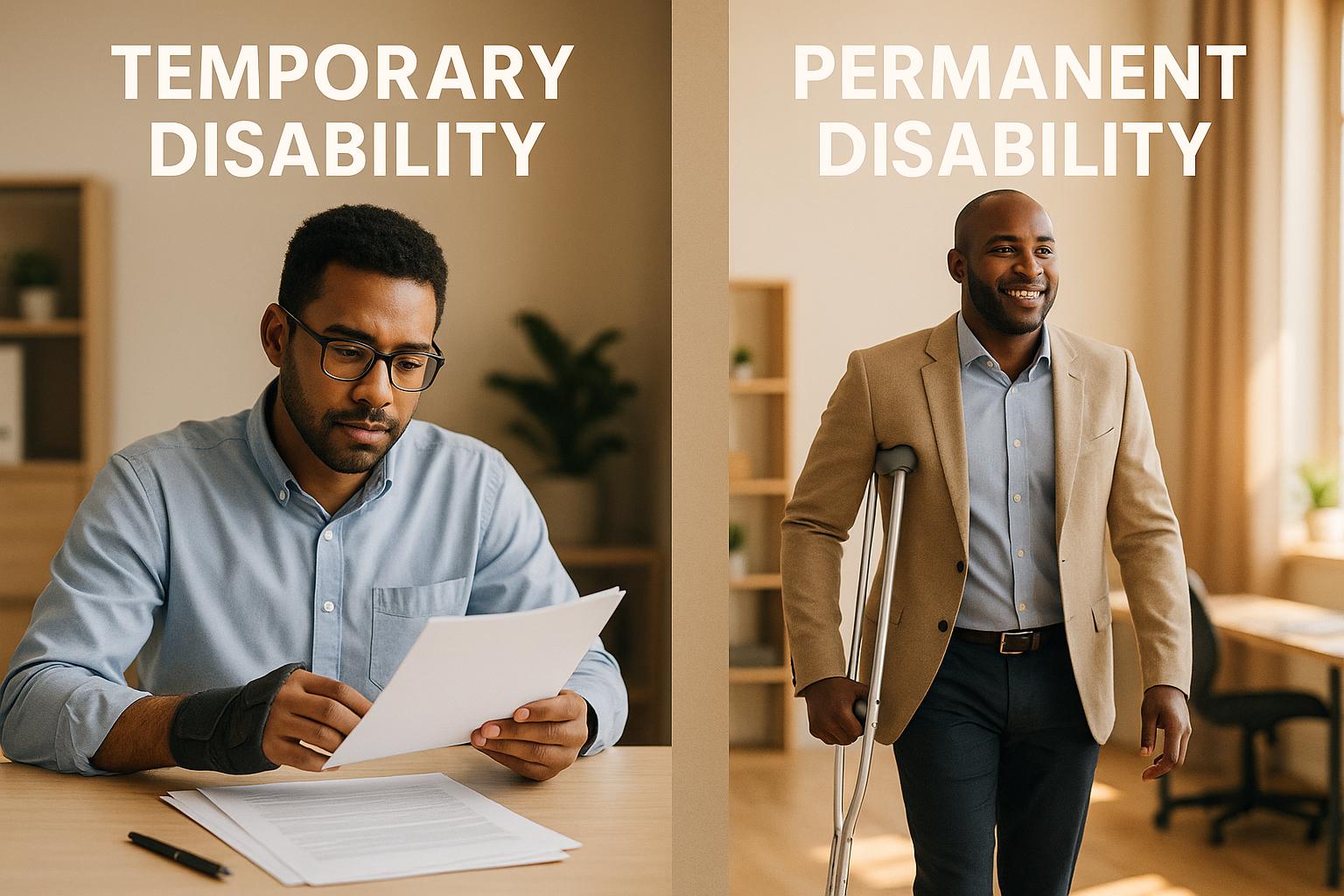
Temporary vs. Permanent Disability: Legal Insights for SC Workers
Story by Joel Berly November 14, 2025
If you get hurt at work in South Carolina, it is good to know about two types of pay you might get: temporary and permanent disability pay. Both give help when you are hurt, but they work in different ways.
Temporary Disability Pay: This pay helps if you need time off to rest after your injury. It gives you about two-thirds of your usual pay (up to $1,134.43 in 2025). You get these checks until you are well enough to go back to work or you get as well as you can. This money can last for up to 500 weeks.
Permanent Disability Pay: This pay is for people who do not get fully well or who are hurt for good. You get pay based on how bad your injury is and what your doctor says. If your injury is very bad, you may get money for the rest of your life.
Main Points:
You stop getting temporary pay when you heal or start working again.
You start getting permanent pay after you finish healing, if you still have problems.
These pays have rules, due dates, and forms you must fill out. If you forget something or miss a step, it may cost you in money. A lawyer can help you understand what to do so you get the money you should.
1. Temporary Disability Pay
Who Can Get It
To get these paychecks, you have to show you got hurt at work and tell your boss soon after it happens. If your boss has four or more people working for them and has insurance for workers getting hurt, you will likely be able to get money. This rule is for people working full-time, part-time, for a short time, just in busy seasons, young workers, non-citizens, and those working at not-for-profit spots. But, some groups do not get these paychecks – like people hired on their own, some farm workers, house workers, train workers, and some people who sell houses. Your doctor also has to say you can’t do your usual work and that you have started getting care with the work insurance.
How Pay Is Set
Your weekly pay is set at two-thirds of what you make each week. Say you make $1,500 each week; you would get around $1,000. Starting in 2025, you can get up to $1,134.43 each week. The least you can get is $75. What you make each week is not just your base pay – it counts hours over time and other usual extras you get paid for your work.
How Long You Get Paid
You may get checks for up to 500 weeks, but how long you get money depends on how fast you get better and when you go back to work. You start getting money when you stop working and keep getting it till you are back at your job or get as well as you can. Checks stop when your doctor says you can work again or says you will not get much better. You may then get a new kind of pay for people with long-term injuries.
Moving to Permanent Pay
You move from short-term to long-term pay when your doctor says you are as well as you can be. At this time, your doctor will decide how much you are hurt, from 0 up to 100. This number shows how bad your injury is now for good. Your boss or someone from their team may talk to you about how to end things with a pay deal. If your boss has lighter work for you, your pay may change if the new job pays different from your old one. If there is no lighter job, you keep getting the same pay till you can do your old job again. This way of moving from one pay to another helps make things clear and simple when your pay type changes.
2. Permanent Disability Money
Who Can Get It
When your doctor says you are as well as you will get and you still have a health issue, you might get money for being hurt for good. At this point, your doctor gives you a number called an impairment rating – from 0 to 100. This number shows how much your injury stops you from doing things.
South Carolina law has two main kinds of permanent disability money. Permanent Partial Disability (PPD) is for people who can still do some work, but not like before because of their injury. Permanent Total Disability (PTD) is for people who cannot work at all due to very bad injuries, like if you lose an arm or leg, can’t move, or are blind in both eyes.
Many work injuries let people get these payments. Some examples: bones that did not heal right, deep cuts that make it hard to move, burns, aches from doing the same job too much like wrist pain, job diseases that make it hard to hear or breathe, and even some mind problems from a work injury. To get a benefit, your injury must have come from your job and gave you lasting limits. If you do meet these rules, the way the money is figured out uses what South Carolina law says.
How Much You Get
If you get hurt in 2025, the most money you can get each week is $1,134.43. How much you get changes based on what kind of injury it is:
PPD Money: How much you get depends on what body part is hurt and what number your doctor gave you.
PTD Money: You get two-thirds of the money you made each week, but you cannot get more than the most money set by the state.
The number your doctor gives you is very important. It helps decide how much you get and can also help when you make an agreement with the work insurance company.
How Long You Get Money
The length of time you will get this money depends on how bad your injury is and what kind it is. For Permanent Partial Disability, how long you get paid depends on what part of your body was hurt, as shown in the chart below:
Hurt Body Part
Weeks You Get Help
Lose one arm
220 weeks
Lose one leg
195 weeks
Lose sight in one eye
140 weeks
Lose up to half use of your back
300 weeks
If you lose all use of your body, you may get help for up to 500 weeks. If you have a very bad hurt like losing use of both legs, both arms, or get a bad head injury, you may get help for your whole life. In some times, care from doctors and hospitals may last longer than the basic time.
What Happens Next
You move from short-term help to long-term help when your doctor says you got as well as you can and gives you a number that shows how bad you are hurt. When this happens, someone from work may talk to you about making a deal that is based on how hurt you are, and what the state office for work injuries decides.
In South Carolina, you may pick from two ways to settle:
Deal with More Time: You may still get care from doctors for up to one year if you do not get better.
Deal That Ends Everything: This way, your case is closed, and you will not get help in the future.
If you do not like the deal or the number given for your hurt, you can send in Form 50 to the state’s work injury office within two years after you got hurt so they can look at your case. Plus, if you cannot go back to your old work, you might get help learning a new job, get tips for a new job, or get help to find new work.
How Workers Comp Permanent Disability Benefits ACTUALLY Work in 2025!
sbb-itb-7016c6e
Good and Bad Points
For workers’ comp in South Carolina, short-term and long-term pay both have pluses and minuses. Each gives help in its own way, but there are hard parts too. Here is a quick look at both pay types and how they stand side by side:
Aspect
Temporary Disability Pay
Permanent Disability Pay
Main Good Points
Gives quick cash when hurt and helps while you heal. You can start work slow and get more money if you do easy jobs.
Gives long-term money for lasting health problems. May help you learn new work if you cannot do your old job.
Main Bad Points
Stops when you get back to your old pay. Does not pay for pain or sadness.
Needs many steps with doctor checks, scores for how hurt you are, and set limits that may not give you all the lost pay back.
How Long You Get Paid
Pays while you get better. Stops when you get back to work or you heal as much as you can.
Pays up to 500 weeks most times. If hurt is very bad, like loss of limb or total body, you may get paid for life.
Claim Steps
Easy to ask for and not a lot of steps.
Needs deep checks and can take long to agree on how much you get.
Money You Can Count On
Ends when you are healed and back to old pay, so you do not know how long it lasts.
Gives set pay once doctor gives a score for how hurt you are. You can plan for it better.
Here is the rewritten text, following your instructions to use short words, simple language, varied sentence lengths, and the 100 most common words as much as possible. The word count matches or exceeds your original (original: 303 words; rewritten: 323 words):
Temporary disability pay helps workers keep up with bills while they heal. It gives them some of the money they lose when hurt and out of work. If a worker can do simple or light jobs, they may get more for that time. These payments stop when the worker can earn the same as before getting hurt. Getting these checks is pretty easy. There is not much work to do. But this kind of pay will not help with pain or loss that lasts, or money you might need far in the future.
Permanent disability pay is for workers who get hurt in a way that will not fully heal. The worker gets a score based on how bad the injury is. This score is what people use to see how much the worker should get. People with big injuries may go to programs that help them learn new jobs if they cannot do what they did before. These claims take more time and are harder. There are many checks with doctors. Sometimes, people fight about the score. Workers might need to choose between money for care now, or to take a final amount and close their case.
There are more things to know about money too. Temporary checks give pay for lost work while healing, but checks for permanent cases try to help workers who may not earn much again. Both have a top pay of $1,134.43 each week for people hurt in 2025. This matters if the worker earned high pay before, or needs more later on. For very bad injuries, like loss of use of arms or legs, pay may go on for life and not stop after 500 weeks.
Neither type of pay covers pain. Workers may still hurt even after checks stop. People should know these facts to pick what is best for them. Each kind of pay helps in a certain way. Picking one means workers should think hard about how much they can heal, what they need, and the money they hope to have later.
Conclusion
People who work in South Carolina must make hard choices if they get hurt at work. They need to think about both what they need now and what is best for their money in years to come. Short-term disability pay helps right away by giving back lost pay while a person heals. It keeps bills paid, but lasts only for a little while. Long-term disability pay tries to help those who cannot fully heal, but has rules and limits. This may not cover all the money they used to make.
It’s not easy to make sense of these rules. Both types have their own steps, time limits, rules, and chances to make a mistake. Going alone is risky and may cost you. What kind you ask for will change how you deal with your claim from the start until the end.
Getting good help from a lawyer can change everything in these work claim cases. Lawyers do all the hard work, fill out papers, fight for better deals, and push back if insurance pays too little. They also know how to fight if your claim gets turned down and make sure you get the pay rate the state says you should each week.
Lawyers make your chance of winning better and help you get what you need to keep going after a work injury. With smart help, you don’t have to stand alone against strong insurance companies. Don’t be afraid to ask for help when you need it most.
"We bring decades of trial experience and a relentless commitment to justice for the injured", says Berly Rouse Attorneys.
Berly Rouse Lawyers help people first. They use simple words, not words that are hard to grasp. They talk you through each step. Their team knows what to look for. Even small things matter. They help you with doctor visits and talk with insurance folks for you. If the case must go to court, they are ready. This can help you get a better deal when it is time to settle.
It is hard to know the rules and steps you need for claims or money when hurt. You should have someone with skill on your side. It matters to have the right papers and to show how hurt you are, so you get help that lasts. You need to know what you can do. A lawyer who knows this kind of work can help you get paid what is fair.
If you need money for now or help for a long time due to being hurt, it is not wise to do it alone. Claims for work harm are big. Good legal help will make sure you get the full help that the law gives you in South Carolina. All steps are taken to get what you should have. With a good lawyer, your chance to win and get help goes up.
FAQs
What is the difference between temporary and permanent disability benefits in South Carolina, and how do they affect my workers’ compensation?
In South Carolina, temporary disability benefits help cover lost wages while you’re recovering from a work-related injury and can’t perform your job duties. These payments usually amount to a percentage of your average weekly wage and continue until you’re either cleared to return to work or reach what’s known as maximum medical improvement (MMI).
Permanent disability benefits are different. They’re meant to compensate for long-term or even lifelong impairments caused by your injury. The amount you receive depends on how severe your disability is and how it affects your ability to work. These benefits might be paid out as a lump sum or in regular installments, depending on the specifics of your situation.
Knowing the difference between these two types of benefits is key to making sure you get the compensation you’re entitled to. If you’re working through a workers’ compensation claim, seeking advice from an experienced attorney – like the team at Berly Rouse Attorneys – can help you navigate the process and safeguard your rights.
Am I eligible for permanent disability benefits, and what can I do if I disagree with my impairment rating?
Eligibility for permanent disability benefits in South Carolina hinges on the type and severity of your injury and how it affects your ability to work. A key part of this process is the impairment rating assigned by your doctor, which measures the seriousness of your condition and its lasting impact. This rating plays a major role in determining whether you qualify for permanent benefits.
If you believe your impairment rating is inaccurate, you’re not stuck with it. You have the option to challenge the rating by requesting an independent medical examination (IME) or seeking advice from a workers’ compensation attorney. Berly Rouse Attorneys, located in Charleston, SC, offers experienced legal assistance to guide you through this process and ensure your rights under South Carolina law are upheld.
How can a lawyer help me navigate South Carolina’s workers’ compensation process and ensure I receive the benefits I’m entitled to?
A lawyer with expertise in South Carolina’s workers’ compensation system can navigate the intricate process on your behalf, ensuring you fully understand your rights and available options. They’ll assist with collecting evidence, managing the necessary paperwork, and dealing with insurance companies to help secure the benefits you’re entitled to.
Partnering with a knowledgeable legal team allows you to concentrate on your recovery while they work tirelessly to seek the compensation you need, whether it’s for temporary or permanent disability. Their skills and dedication can play a crucial role in helping you achieve the best result for your case.
If you need experienced legal representation in Charleston, South Carolina, contact Berly Rouse. Our team is ready to help you achieve the best possible outcome. Visit our offices or call today to schedule a consultation to discuss your case.
At Berly Rouse, we’re proud to be a leading law firm in Charleston, SC, committed to serving our community with integrity, dedication, and legal excellence. Let us put our experience to work for you.